Editor's Pick

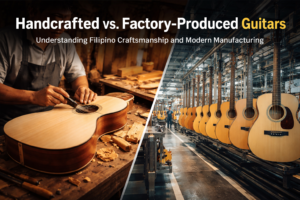
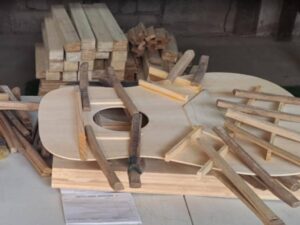
In today’s guitar market, musicians are often faced with two very different types of instruments: handcrafted guitars and factory-produced guitars. At first glance, they may look similar, but the way they are built—and how they feel and sound—can differ significantly. Understanding these differences helps musicians make more informed choices and better appreciate the craft behind their instrument. How Filipino Luthiers Traditionally Build Guitars In the Philippines, guitar-making is deeply rooted in tradition, especially in well-known luthiery towns such as Guagua, Pampanga. Filipino luthiers often learn their craft through apprenticeship, observing and practicing techniques that have been passed down for generations. Unlike factory production, traditional luthiery relies heavily on hands-on methods, including: Hand-shaping: Each neck, body, and brace is carved and refined by hand rather than cut entirely by automated machines. This allows the luthier to respond to the natural characteristics of the wood. Voicing: Luthiers carefully shape the soundboard and internal bracing to influence how the guitar vibrates and resonates. This step is crucial in determining the instrument’s tonal personality. Tap-tuning: By gently tapping the wood and listening to its response, the luthier adjusts thickness and bracing until the desired tonal balance is achieved. This is a skill developed through
Read More »

About the Authors

Mr. Cool is Michael G. Lucero, a Filipino civil engineer based in Dubai, UAE, and co-founder of JMJ Guitars. He loves guitars, music, bikes, and motorcycles, and writes narrative stories for JMJ Guitars and occasionally for a magazine, as well as unpublished works. His blogs explore music, craftsmanship, and the quiet intersections of engineering, creativity, and everyday life abroad.

Junill Q. Lucero is a former teacher turned full-time entrepreneur and a former OFW. She is the Founder and Director of JMJ Musical Goods Trading and JMJ Guitars, located in Nepo Mart, Angeles City, Pampanga. Junill contributes content to the JMJ Guitars website, serves as the main Quality Control for the guitars and other musical instruments in their shop, and is also an ambassador of JMJ Guitars. Guided by her faith, she brings purpose, integrity, and passion into everything she does.

Copyright © JMJ Guitars 2025. All rights reserved.